BBA After 12th 2026: Why It’s the Best Career Choice – Scope, Salary & Why Lexicon MILE Stands Out
The biggest question every student faces right after 12th is -“What next?” If your interest lies in business, management, or leadership roles, a BBA after 12th (Bachelor of Business Administration) consistently ranks among the top career choices. In this blog, we’ll break down why BBA is a smart choice in 2026, what its career scope and salary potential look like, how it compares to B.Com, and what to look for in a program before enrolling.
Is BBA a Good Career Option After 12th in 2026?
Short answer: Yes, especially if you’re interested in management, business operations, marketing, or finance roles.
BBA is a 4-year undergraduate program that covers business fundamentals – management, finance, marketing, HR, and operations. Compared to traditional degrees, BBA tends to be more practical and industry-oriented, since its curriculum is designed specifically around business roles rather than pure academic theory.
In 2026, as companies increasingly adopt AI, data analytics, and digital tools across every department, they prefer BBA graduates who are already comfortable working with these tools rather than needing extensive training after joining. This is exactly why modern BBA programs – like Lexicon MILE’s AI Integrated Industry-Ready BBA – go beyond textbook theory and teach Advanced Excel, Power BI, Tableau, and AI-driven decision-making tools as part of the core curriculum.
What Is the Career Scope of BBA in 2026?
BBA graduates have multiple career paths open to them, which is one of the biggest advantages of the degree:
- Direct Job Roles – business analyst, marketing executive, HR associate, operations coordinator, sales manager, and other entry-level corporate roles across industries.
- Higher Studies – pursuing an MBA or PGDM after BBA is a natural progression that boosts both career growth and salary, and BBA graduates often adjust to MBA coursework faster since they already understand core business concepts.
- Entrepreneurship – the BBA curriculum builds entrepreneurial thinking, financial literacy, and operational understanding, which is valuable for those looking to start their own business straight after graduation.
- Competitive Exams – a BBA background also provides a solid analytical and case-study-based foundation for UPSC, MPSC, or Defence exams, particularly for the General Studies and case-analysis components.
- Specialized Roles – if you’ve specialized in Finance, HR, Marketing, Agri Business, or Services Management, you become eligible for specialized roles within that specific domain from your very first job.
As the business world evolves rapidly, demand keeps growing for professionals who combine business fundamentals with modern tools – and that’s exactly the advantage a well-structured BBA offers over a purely theoretical commerce degree.
What Is the Salary Potential After BBA?
For freshers, BBA salaries vary depending on the role, company, city, and – most importantly – the skillset a candidate brings to the table. Students who graduate with internships, live project experience, and industry-tools training generally land better starting packages, because they’re “job-ready,” not just “degree-holders.”
Recruiters today increasingly filter freshers based on practical exposure rather than academic scores alone. So when choosing a BBA college, don’t just look at the degree – look at how much practical exposure, internship support, and placement assistance the program offers. These factors, more than the degree name itself, are what actually determine long-term salary growth and how quickly a graduate is considered “promotion-ready.”
BBA vs B.Com: Which Is Better for a Business Career?
This is a comparison students make very often, especially those from a Commerce background in 12th. Both courses share a commerce foundation, but their approach is quite different:
| Factor | BBA | B.Com |
|---|---|---|
| Focus | Management & business administration | Accounting & finance theory |
| Approach | Practical, case-study based | Theory-heavy |
| Skill Building | Leadership, communication, decision-making | Numerical & accounting skills |
| Career Path | Management roles, MBA/PGDM, entrepreneurship | CA, accounting, banking, further commerce studies |
| Industry Tools | AI, analytics tools, ERP/CRM (in modern programs) | Traditionally less tool-focused |
If your goal is to move into management or leadership roles, or if you want to understand business from a practical, decision-making lens, BBA is the better fit. If you’re aiming for a specific finance path like accounting, taxation, or Chartered Accountancy, B.Com may suit you better since it aligns more closely with CA foundation requirements. Both are valid paths – the right choice genuinely depends on your career goals rather than one degree being universally “better” than the other.
What Is the Best Management Course After BBA for a High-Salary Job?
BBA itself is a strong foundation degree, but if you’re targeting higher salaries and senior roles, pursuing an MBA or PGDM after BBA is the most common and effective path. BBA graduates naturally have an edge in MBA programs because they already have a business fundamentals base to build on, which often means less time spent on catching up during the first year of an MBA.
So BBA isn’t just a standalone degree – it’s a launchpad that prepares you for higher management education and senior corporate roles down the line, while also keeping the door open for direct employment if you choose not to pursue further studies immediately.
Why Does Lexicon MILE’s BBA Program Stand Out?
Not all BBA programs are the same, and the gap between a basic BBA and a well-structured one shows up clearly in placement outcomes. Lexicon MILE’s AI Integrated Industry-Ready BBA program combines traditional business education with modern AI tools, so students graduate as “Day Zero Professionals” ready to perform from day one.
Some key highlights:
- 5 Specializations – Finance, HR, Marketing, Agri Business, and Services Management, letting you define your career path early instead of graduating with only generic business knowledge.
- Hands-on AI & Analytics Training – Advanced Excel, Power BI, Tableau, KNIME, and Agentic AI tools like Microsoft Copilot Studio, integrated directly into the semester-wise curriculum.
- Real Industry Exposure – social internships (NGOs/CSR projects), corporate internships (MNCs/startups), and live projects that mirror actual workplace problems.
- HyperBuild AI Lab – real-time product development and innovation learning, where ideas are turned into working business solutions.
- Holistic Development – communication skills, leadership grooming, corporate etiquette, and competitive exam support (CAT, GMAT, UPSC, MPSC, Defence).
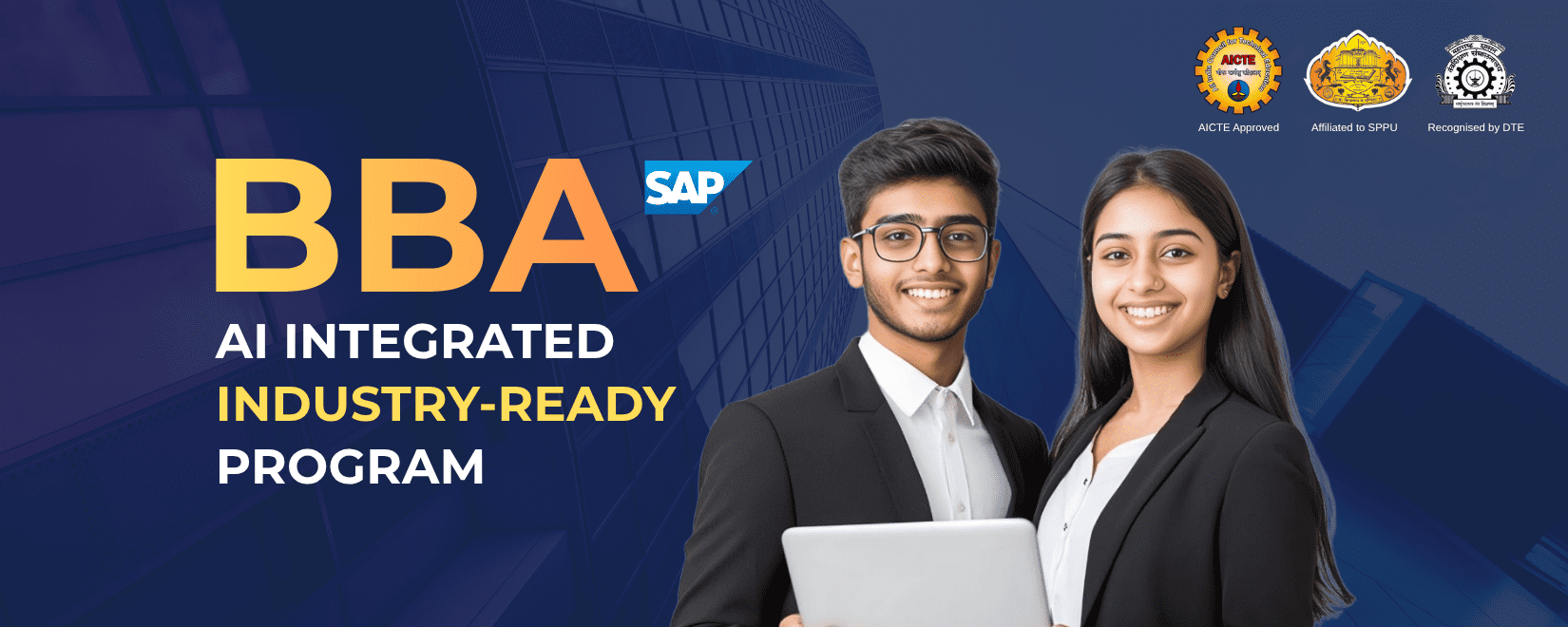
- Recognized Institute – AICTE-approved, SPPU-affiliated, DTE-recognised, and ranked Rank 1 Private Standalone Institute in Pune by Outlook.
Together, this combination gives students more than classroom knowledge – it gives them practical readiness for the real business world, which is increasingly what recruiters screen for at the entry level.
What Should You Look for Before Choosing Any BBA College?
If Lexicon MILE isn’t your only option under consideration, here’s a quick checklist worth applying to any BBA program in 2026:
- Does the curriculum include hands-on tool training (analytics, ERP, CRM), or is it purely theoretical?
- Are internships built into the program structure, or left entirely to the student to arrange?
- What is the institute’s placement track record, and does it publish this transparently?
- Is the college AICTE-approved and university-affiliated, ensuring the degree is recognized?
- Does the program offer specialization choices aligned with your career interest?
Running any shortlisted college through these questions will give you a clearer picture than comparing fee structures or rankings alone.
Conclusion: Is BBA After 12th Worth Pursuing in 2026?
If you want to build a career in business, leadership, or management, BBA after 12th is a smart and future-ready choice in 2026 – especially when the program is integrated with AI and analytics tools rather than relying purely on textbook theory. It gives you an early career advantage, builds a strong business foundation, and also serves as a solid launchpad for higher studies like an MBA.
If you’re looking for a program that combines traditional business education with modern AI-driven learning, it’s worth exploring Lexicon MILE’s BBA program.
Want the complete details on fees, eligibility, and the admission process? Read our detailed blog: “Lexicon MILE BBA Admission 2026: Fees, Eligibility, CUET Score & How to Apply” (Interlink the blog)
Frequently Asked Questions (FAQs)
1. Is BBA a good career option after 12th in 2026?
Yes – BBA after 12th is a strong choice, especially if your interest lies in management, marketing, finance, or HR roles. Modern AI-integrated BBA programs make it even more relevant today by adding practical, in-demand skills.
2. BBA vs B.Com – which is better for a business career?
BBA focuses on management and practical business skills, while B.Com focuses on accounting and finance theory. The right choice depends on your career goals – management roles favor BBA, while CA or core accounting paths favor B.Com.
3. What kind of salary do freshers get after BBA?
Salary varies by role, company, city, and skill set. Graduates with practical exposure, internships, and industry-tools training generally get better starting opportunities than those with a purely theoretical degree.
4. What is the best higher-studies option after BBA?
An MBA or PGDM is the most common and effective progression after BBA, paving the way for senior roles and higher salaries, especially since BBA graduates typically adapt faster to MBA-level coursework.
5. How is Lexicon MILE’s BBA program different from other BBA colleges?
Its AI Integrated Industry-Ready curriculum, 5 specializations, real industry internships, and AI/analytics tools training make it a practical, placement-focused program rather than a purely theory-based one.
6. What should I check before choosing any BBA college?
Look at hands-on tool training, built-in internships, placement track record, AICTE approval/university affiliation, and available specializations before making a decision.