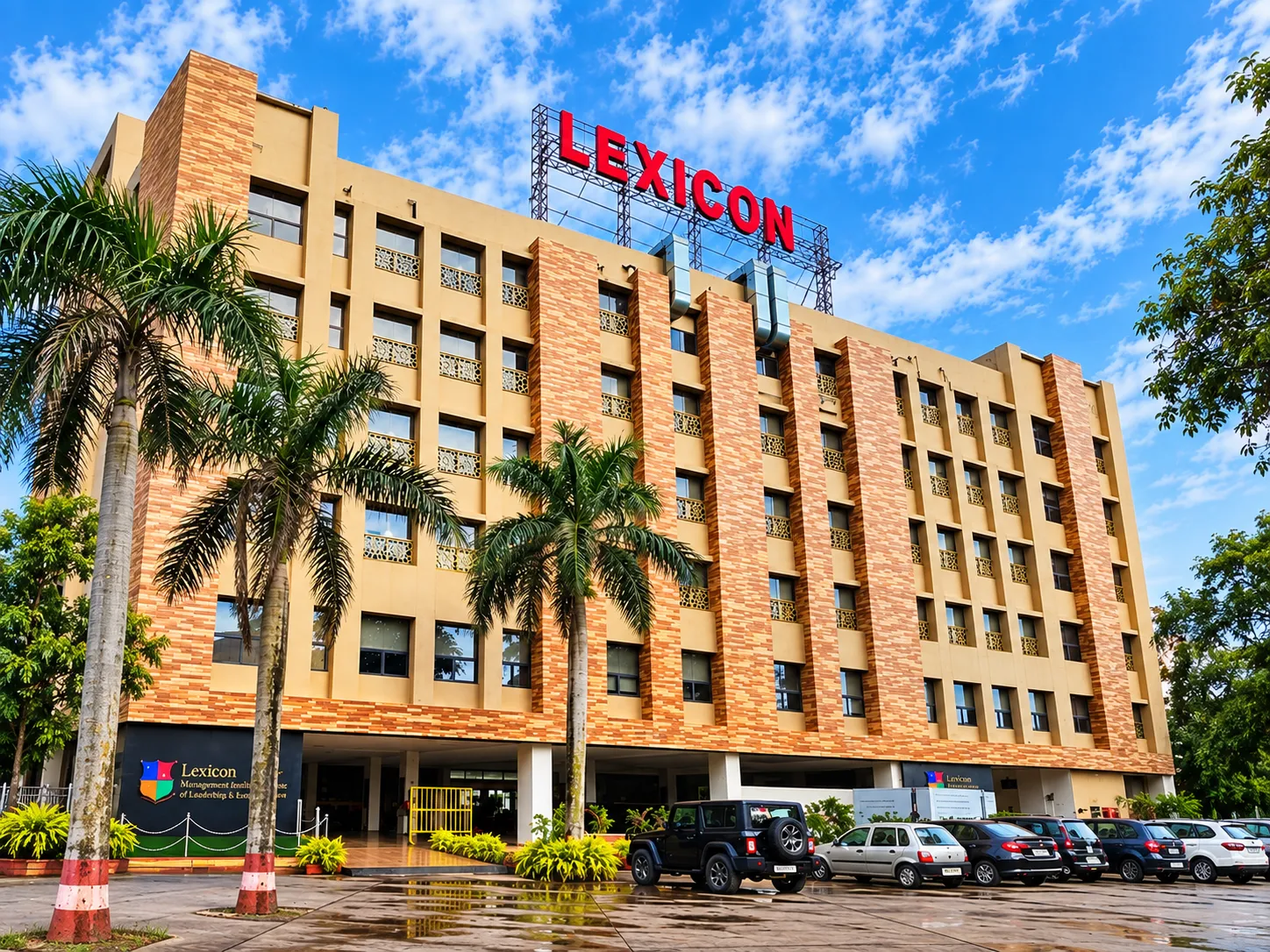

Every management aspirant eventually hits this fork: Global MBA vs regular MBA – pay more for international exposure, or does a strong domestic MBA deliver where you want to go? In 2026, this question is more relevant than ever – and the honest answer isn’t found in institute brochures. It’s found in real fee data, verified salary outcomes, and what employers in India and abroad are actually paying for.
This blog covers the full picture: what separates the two qualifications, how the fee gap really compares across all options, which career paths each opens, and when a regular MBA is actually the better financial choice – based on data from across India’s management education market.
| Quick Answer: A Global MBA is worth the premium when you’re targeting multinational employers, UK or international placements, or careers where a globally recognized degree credential carries specific hiring weight. A regular MBA delivers strong ROI for domestic Indian careers. The fee gap between the two is smaller than it appears when travel and visa are bundled – and significantly smaller than a full overseas MBA. |
What Is the Real Difference Between a Global MBA and a Regular MBA?
Before comparing costs and outcomes, it helps to understand what actually separates the two qualifications in 2026:
| Parameter | Regular MBA (India) | Global MBA (Dual-Campus, e.g. USW) |
|---|---|---|
| Degree Awarded By | Indian University (UGC-recognized) | International university (e.g. USW, UK) |
| Campus Model | Single campus, India | Dual-campus: India + overseas university |
| Curriculum Control | University-governed (1–3 yr update cycle) | Employer-designed, faster update cycle |
| International Internship | Optional / not guaranteed | 3–4 months built into UK phase |
| Global Recognition | Strong in India; limited internationally | Recognized across 120+ countries |
| Post-Study Work Rights | India-based | UK Graduate Route Visa eligible (2 yrs) |
| Alumni Network | India-focused | International alumni across 120+ countries |
| Travel & Visa | Not applicable | Bundled at Lexicon MILE (one-way + visa) |
The fundamental difference is not prestige – it’s structural access. A Global MBA from an internationally accredited partner university opens employment pathways in the UK, Europe, and among India-based multinationals that a domestic degree credential alone does not.
How Do Global MBA Fees Compare to Regular MBA Fees in India?
This is where most comparisons are misleading – they either compare only against cheap domestic options or only against full overseas programmes. Here’s the complete, honest picture across all options in 2026:
| Programme Type | Total Fees (India) | Additional Costs | Degree From |
|---|---|---|---|
| State university MBA | ₹2–5 lakhs | Minimal | State university (India) |
| Mid-ranked private MBA | ₹8–15 lakhs | Accommodation if relevant | Indian university (UGC) |
| Top IIM PGDM | ₹23–26 lakhs | Living expenses on campus | IIM (autonomous) |
| ISB PGP (1-year) | ₹40 lakhs | Opportunity cost high | ISB (AACSB) |
| MBA Global MBA – Dual Campus (e.g. Lexicon MILE + USW) | ₹7.5L (India) + GBP 7,500 (UK) | Travel + visa included at Lexicon MILE | University of South Wales, UK |
| Full MBA – UK (mid-tier) | £25,000–£40,000 tuition | £12,000–18,000/yr living | UK university |
| Full MBA – USA (top school) | USD 120,000–200,000 tuition | USD 30,000–50,000/yr living | US university |
| Key insight: The dual-campus Global MBA model (study part in India, part at the overseas university) occupies a unique position in this landscape – it delivers an internationally accredited degree at a fraction of the cost of studying fully abroad, while maintaining India-phase benefits like family proximity, lower living costs, and Indian market network. |
Is a Global MBA Recognized in India and Internationally?
Recognition depends entirely on who awards the degree – not where you studied the India component.
A Global MBA from a dual-campus programme, where the degree is awarded by an internationally accredited university (like the University of South Wales, UK – Privy Council accredited, QAA endorsed), carries the same credential weight as a degree earned entirely on that university’s campus. The country where you studied the first phase doesn’t diminish the qualification.
In 2026, Financial Times Global MBA Rankings data shows that several Indian programmes are now gaining international recognition. XLRI ranked #1 globally for the highest salary increase (249% in FT 2025 rankings) among all globally ranked B-schools. ISB reported a 248% salary increase to $201,712 (weighted average 3 years post-MBA), ranked 5th globally for weighted alumni salary – demonstrating that Indian management education credentials are increasingly competitive internationally.
For dual-campus Global MBA programmes, the credential recognized internationally is the one from the overseas partner – not the Indian institute. This is the critical distinction that separates genuine Global MBA programmes from those that use the label as marketing.
What Career Outcomes Does a Global MBA Produce vs a Regular MBA?
Let’s compare actual career outcomes across the market in 2026:
| Programme Type | Avg Starting Package | Top Package | International Placement Access |
|---|---|---|---|
| State university MBA | ₹4–7 LPA | ₹10–14 LPA | Very limited |
| Ranked private MBA (India) | ₹8–14 LPA | ₹18–22 LPA | Limited |
| IIM / ISB (top-tier India) | ₹28–35 LPA avg | ₹75–97 LPA | Moderate – domestic MNCs |
| Global MBA (dual-campus, Lexicon MILE) | ₹8–14 LPA domestic | ₹49 LPA intl. (Apple) | Strong – UK Graduate Route Visa |
| Full MBA abroad (UK top-25) | £45,000–60,000 GBP | £80,000–120,000 GBP | Very strong – home market advantage |
The dual-campus Global MBA sits in a unique position: domestic outcomes comparable to ranked private MBA institutes, with international placement access approaching (and in some sectors matching) full overseas study – at a fraction of the cost.
What makes the international placement access genuine is the overseas internship component (3–4 months at the UK partner university), which creates direct employment pipelines with UK-based companies. This internship-to-employment conversion is how packages of ₹49 LPA (Apple), ₹43 LPA (BT), and ₹40 LPA (Housekeep) become real outcomes rather than statistical outliers.
Which Jobs Pay the Highest After a Global MBA in 2026?
Based on data from 2026 placement reports, FT rankings salary data, and industry salary surveys, here are the highest-paying career tracks for Global MBA graduates:
| Career Track | Entry Salary (India) | Entry Salary (UK/International) | 5-Year Trajectory |
|---|---|---|---|
| Management Consulting | ₹15–28 LPA | £45,000–70,000 GBP | ₹35–50 LPA / £80,000+ GBP |
| Investment Banking / Finance | ₹12–22 LPA | £50,000–80,000 GBP | ₹40–60 LPA / £100,000+ GBP |
| Business Analytics / Strategy | ₹10–18 LPA | £40,000–65,000 GBP | ₹28–45 LPA / £75,000+ GBP |
| Technology Management | ₹12–20 LPA | £45,000–75,000 GBP | ₹30–50 LPA / £80,000+ GBP |
| Marketing & Brand Management | ₹8–15 LPA | £35,000–55,000 GBP | ₹20–35 LPA / £65,000+ GBP |
| Supply Chain & Operations | ₹8–14 LPA | £35,000–50,000 GBP | ₹18–28 LPA / £60,000+ GBP |
Sources: 2026 FT Global MBA Rankings salary data, GMAC Corporate Recruiters Survey 2025 and Lexicon MILE 2025 placement cycle.
What Are the Real Benefits of Studying a Global MBA in 2026?
-
Benefit 1: UK Graduate Route Visa — 2 Years Post-Study Work Rights
Students completing their degree at a UK university are eligible for the UK Graduate Route visa, granting 2 years of work authorization in the UK without requiring a job offer in advance. This is a structural advantage that makes international job-searching significantly more accessible for Indian graduates – a pathway unavailable through any purely domestic MBA.
-
Benefit 2: Internationally Recognized Degree Credential
The GMAC Corporate Recruiters Survey 2025 confirms that more than 90% of global employers plan to hire MBA talent, with the median global MBA salary rising to US$125,000. This demand is specifically for internationally recognized management credentials – a USW degree (Privy Council accredited, QAA endorsed) meets this standard in the UK and EU employer market.
-
Benefit 3: Cross-Cultural Learning Environment
UK university campuses are genuinely international – USW’s Cardiff campus has students from multiple nationalities. For Indian students who have studied exclusively in Indian classroom environments, this cross-cultural academic experience is a professional differentiator that domestic programmes cannot replicate.
-
Benefit 4: Employer Perception at Multinationals
Companies like HSBC, Siemens, Aviva, British Gas, Allstate, and TIAA – global companies with significant India operations – have specific hiring frameworks that value internationally accredited degrees. A dual-campus Global MBA credential can signal international academic standards in a way that a purely domestic credential does not for these employers.
-
Benefit 5: Cost Efficiency vs Full Overseas Study
The clearest benefit of studying a global MBA through a dual-campus model is the cost: roughly ₹7.5 lakhs (India phase) + GBP 7,500 (UK tuition) vs. £25,000–£40,000+ tuition alone for a full UK MBA, plus £12,000–18,000/year in living costs. The dual-campus model delivers the same UK degree credential at 20–30% of the total cost of full overseas study.
When Is a Regular MBA the Better Choice?
Honest guidance means acknowledging when the Global MBA premium isn’t the right financial decision:
- If your 5-year career goal is entirely within India’s domestic market – Indian FMCG, domestic banking, public sector, or Indian SMEs – a strong domestic MBA from a ranked institute delivers comparable domestic career outcomes at lower total cost
- If you’re targeting government or PSU roles that specifically require a UGC-recognized MBA degree – a regular MBA from a recognized university is the more secure credential
- If your budget is constrained and you need the fastest possible ROI – state university MBA programmes at ₹2–5 lakhs with reasonable placement outcomes may be more financially rational than a ₹15+ lakh Global MBA
- If you plan to pursue a PhD in India, a university-awarded MBA degree has more straightforward academic eligibility than a dual-campus Global MBA diploma at some institutions
The Global MBA premium pays off most clearly for candidates targeting international employers, UK/EU career pathways, or multinational companies in India where the overseas credential carries specific weight.
How Does Lexicon MILE’s MBA Global Compare in This Landscape?
For students specifically evaluating Lexicon MILE’s MBA Global (in academic partnership with University of South Wales, UK) alongside other options:
| Criterion | Lexicon MILE + USW Global MBA |
|---|---|
| Programme vintage | 7th batch — proven track record, not a new experiment |
| India component fees | ₹7,50,000/- (inclusive of GST) — one-way travel + visa included |
| UK component fees | GBP 7,500/- (University of South Wales tuition) |
| UK partner accreditation | Privy Council + QAA (same framework as Oxford, Cambridge) |
| Visa rejection rate | Zero rejections across all 7+ batches |
| Highest international package | ₹49 LPA — Apple, UK (2025 cycle) |
| UK Graduate Route Visa | Eligible upon degree completion at USW |
| NHS medical in the UK | Covered as part of the National Health Service |
| Internship | 3-4-month overseas internship in the UK phase |
| Specializations | Marketing & Sales | HR | Financial Services | Operations & SCM |
International recruiters: Apple (49 LPA) | BT Group (43 LPA) | Housekeep (40 LPA) | UK Health Security Agency (33 LPA) | Lloyds Bank (28 LPA) | BNY Mellon (26 LPA) | Siemens | Aviva | Allstate | British Gas | Admiral Group | TIAA
Frequently Asked Questions (FAQs)
-
Is a Global MBA recognized in India?
A Global MBA is recognized in India when an internationally accredited overseas university awards the degree. In Lexicon MILE’s case, students receive a degree from the University of South Wales, UK (Privy Council-accredited, QAA-endorsed) – recognized in India for private-sector roles and accepted by multinational employers operating in India.
-
What is the difference between Global MBA and MBA abroad?
MBA abroad requires full-time study and residence in another country for the entire duration. A Global MBA through a dual-campus programme (like Lexicon MILE + USW) allows you to complete the India phase locally, then complete the UK phase at the partner university – delivering the same UK degree at 20–30% of the full overseas cost.
-
Is Global MBA worth it in India in 2026?
For students targeting multinational employers, UK/EU placements, or cross-border careers – yes. The UK Graduate Route Visa, the internationally recognized degree credential, and the overseas internship pipeline create career access that a domestic MBA alone cannot. For exclusively domestic career goals, a strong domestic MBA or PGDM may offer comparable returns at lower cost.
-
What is the ROI comparison between Global MBA and regular MBA?
Full MBA abroad (UK): ₹50–80 lakhs total cost, breakeven 3–5 years. ISB/top-IIM: ₹25–40 lakhs, breakeven under 2 years due to high average salaries. Global MBA dual-campus (Lexicon MILE + USW): ~₹15–16 lakhs total, with domestic ROI comparable to ranked private MBA and international placement access extending the ceiling. Regular MBA (ranked private): ₹8–15 lakhs, solid domestic ROI. The dual-campus Global MBA occupies the strongest ROI position for students targeting international placements.
So – Global MBA vs Regular MBA: Which Wins in 2026?
For domestic careers in India: a well-ranked domestic MBA or PGDM from a quality AICTE-approved institute delivers strong ROI without the additional international credential cost.
For careers with any international dimension – working for a UK or European employer, targeting MNC roles where international accreditation carries hiring weight, or planning to use the UK Graduate Route Visa – the Global MBA vs regular MBA comparison tips clearly in favour of the Global MBA. The dual-campus model specifically (India phase + overseas university phase) delivers an internationally accredited degree at a fraction of full overseas study cost – the strongest ROI position in this comparison for India-based management aspirants with international career ambitions.
Ready to Take Your MBA Beyond Borders?
Explore Lexicon MILE’s MBA Global, offered in academic partnership with the University of South Wales, UK. Gain international exposure, a globally recognised degree, overseas internship opportunities, and industry-ready skills-all through a dual-campus learning experience designed for tomorrow’s business leaders.