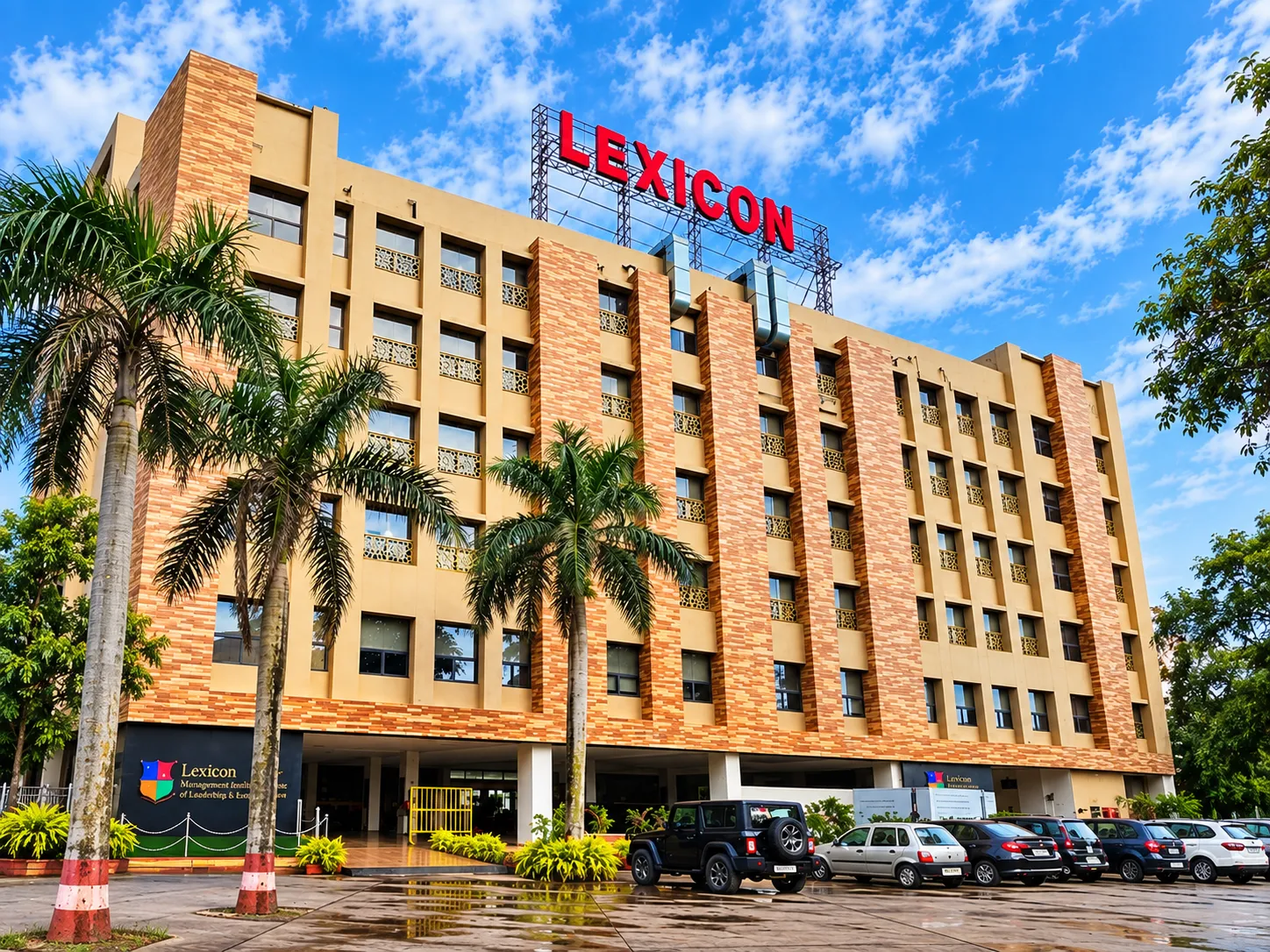

Thousands of Indian management aspirants are asking the same question in 2026: is there a way to earn a real international MBA degree – not just a programme with ‘global’ in the name – without uprooting your life, spending ₹40–80 lakhs, and relocating abroad for two full years? Through a genuine MBA international university collaboration programme, yes. But how it works, what makes it legitimate, and why most versions fall short are things most prospective students don’t fully understand.
This blog covers the full picture: how the dual-campus MBA model works across India’s evolving education landscape, what India-UK collaboration means in 2026 (including the new UK branch campus wave), how to evaluate any programme before committing, and where Lexicon MILE’s USW partnership fits in that landscape.
| Quick Answer: A legitimate MBA international university collaboration allows you to complete part of your degree at an Indian institute and the remainder at an accredited overseas university – with the final degree awarded by the international partner. In 2026, India’s dual-campus MBA landscape is expanding rapidly through UGC regulations, UK branch campuses, and established collaboration models. The key is knowing how to separate genuine academic partnerships from marketing labels. |
How Is India’s International University Collaboration Landscape Changing in 2026?
The Indian management education landscape is undergoing one of its most significant structural shifts in decades – driven by three parallel developments in 2026:
-
The India-UK Vision 2035
The India-UK Vision 2035, endorsed in July 2025, identifies education as a key pillar of bilateral cooperation. This framework has directly enabled UK universities to establish branch campuses in India under UGC’s new international branch campus regulations – creating a new category of international education access for Indian students.
-
UK University Branch Campuses Opening in India (2026)
Several leading UK universities are expanding into India under the UGC’s foreign university regulations, allowing students to earn UK-accredited degrees without relocating overseas. Recent entrants include the University of Bristol (Mumbai), University of Aberdeen (Mumbai), Lancaster University (Bengaluru), and the already operational University of Southampton (Gurugram), with programmes spanning business, computing, AI, engineering, and data science.
These branch campuses award the same home-country UK degrees as their main campuses – at significantly lower cost than studying fully abroad. They represent one model of international university collaboration; the dual-campus model (study India phase locally, then travel to the UK for the second phase) represents another.
-
UGC’s New Dual-Degree Framework
UGC’s 2022 regulations explicitly enable joint degrees and dual-degree programmes between Indian and foreign universities. This has led to a wave of new collaborations – from DDU Gorakhpur University’s recently approved dual MBA with Malaysia’s Lincoln University College (July 2026 – UP’s first such programme) to established programmes like Lexicon MILE’s collaboration with USW, UK.
What Exactly Is a Genuine MBA International University Collaboration?
The term MBA international university collaboration is used loosely in Indian education marketing. Here’s how to identify a genuine programme from a label:
| Criteria | Genuine Collaboration | Marketing Label Only |
|---|---|---|
| Degree awarded by | The overseas partner university | The Indian institute only |
| Credit requirements at overseas university | Defined portion (e.g., 60+120 credits) | Optional or none |
| Quality assurance framework | Overseas university’s standards apply | Indian institute’s standards only |
| Entry requirements | Must meet overseas university criteria | Only Indian institute criteria |
| Physical campus requirement | Students must attend overseas campus | Study tour or guest lecture only |
| Track record | Multiple batches, verifiable outcomes | New/unproven programme |
The simplest test: Whose name is on the degree certificate? If the answer is only the Indian institute’s name, it is not a genuine MBA international university collaboration – regardless of how it’s marketed.
What Are the Three Models of International MBA Collaboration Available in India in 2026?
-
Model 1: Branch Campus – Full Degree in India
UK or foreign university operates a full campus in India. Students attend exclusively in India and receive the home-country degree. Examples: University of Aberdeen Mumbai (opening 2026), Lancaster University Bengaluru (opening 2026).
Advantage: No relocation required at all.
Limitation: Less international exposure than the dual-campus model; still new and unproven in India context.
-
Model 2: Dual-Campus – Part India, Part Abroad
Students complete the India phase at an Indian partner institute, then travel to the overseas university for the second phase. The degree is awarded by the overseas university. This is the study-part-in-India, part-abroad MBA model. Example: Lexicon MILE + University of South Wales (60 credits India + 120 credits UK).
Advantage: Genuine international campus experience + lower total cost than full overseas study.
Key requirement: Visa, travel, and IELTS.
-
Model 3: Twinning Programme – India Degree + International Partner Recognition
Indian institute and overseas university sign an MoU; students get an Indian degree with some international recognition component. These vary widely in quality and how meaningful the ‘international’ element actually is. Some twinning programmes offer genuine credit transfer; others offer only a certificate of completion from the partner. Always verify what the overseas partner actually contributes to the academic credential before enrolling.
| The dual-campus model (Model 2) typically offers the strongest combination of international credential quality, genuine overseas experience, and cost efficiency compared to full overseas study. |
How Do You Evaluate Any MBA International Collaboration Programme Before Applying?
Whether you’re evaluating a dual-campus MBA, a branch campus programme, or a twinning arrangement, apply this 7-point framework:
- Whose name is on the degree? – Must be the overseas university, not just the Indian institute
- Is the overseas university independently accredited? – Look for national bodies: Privy Council + QAA (UK), SACSCOC (US), TEQSA (Australia), NAAC equivalent
- What are the specific credit requirements at the overseas campus? – ‘Part of your programme in the UK’ is vague; demand specific credit counts
- What is the visa track record? – For dual-campus programmes, ask for visa approval rates across past batches
- What are the verifiable placement outcomes? – Recruiter names, salary ranges, verifiable on LinkedIn
- How many batches has the programme completed? – A 7th batch programme has proven infrastructure; a 1st batch programme is a hypothesis
- What does the overseas university say about the programme? – Check the partner university’s own website for the collaboration listing
Why Is India-UK the Most Developed International MBA Collaboration Market?
Among all international MBA collaboration options for Indian students, MBA colleges in India with UK university partnership represent the largest and most developed category. Here’s why:
-
Historical Relationship
The India-UK higher education relationship has existed for decades – UK universities have been partners with Indian institutions under various frameworks since the 1990s. This means most India-UK MBA collaborations are mature, with multiple batches of graduates and verifiable outcomes.
-
QAA and Privy Council Accreditation
UK universities operate under the Quality Assurance Agency (QAA) – one of the most rigorous higher education quality frameworks globally. A degree from any UK university (Russell Group or otherwise) carries Privy Council accreditation, which is recognized by employers in the UK, EU, India, and across 120+ countries.
-
UK Graduate Route Visa
Students completing their degree at a UK university campus (not a branch campus in India) are eligible for the UK Graduate Route visa – 2 years of work authorization in the UK post-graduation without requiring a prior job offer. This is a structural career advantage that makes India-UK dual-campus programmes particularly valuable for students with international career ambitions.
-
India-UK Vision 2035
The bilateral framework endorsed in July 2025 specifically identifies education as a cooperation priority, enabling branch campuses, joint degrees, and research partnerships. This policy context means the India-UK collaboration landscape will continue expanding significantly through 2026-2030.
How Do Different India-UK MBA Collaboration Models Compare in 2026?
| Programme Type | Cost (India) | Cost (UK) | UK Degree | UK Graduate Visa | Track Record |
|---|---|---|---|---|---|
| UK Branch Campus in India (new 2026) | Similar to Indian private MBA | Not applicable | Yes | No (studied in India) | New – unproven |
| Dual-Campus MBA (e.g., Lexicon MILE + USW) | ₹7.5L (incl. travel + visa) | GBP 7,500 | Yes (USW) | Yes – eligible | 7+ batches |
| Full MBA at UK university | Not applicable | £25,000–£50,000+ | Yes | Yes – eligible | Established |
| Twinning Programme (India degree, UK recognition) | ₹5–15L typically | Minimal / none | Indian degree only | No | Varies widely |
Key observation: UK branch campuses opening in 2026 offer the UK degree without relocation, but students study entirely in India and are not eligible for the UK Graduate Route Visa. The dual-campus model remains unique in combining the UK degree credential + genuine overseas campus experience + UK work rights eligibility.
Best Global MBA Programmes in Pune and Maharashtra – How to Evaluate the Market
Pune is one of India’s most MBA-dense markets. Several institutes claim international university collaboration. Maharashtra’s best global MBA programs in Pune should be evaluated against the 7-point framework (Mentioned Above). Here’s what the market broadly looks like:
-
Types of Programmes Available in Pune (2026)
The Pune MBA market includes: state university-affiliated MBAs with international exposure components; AICTE-approved PGDM programmes with study abroad options; genuine dual-campus programmes with overseas university degree awarding; and twinning arrangements of varying quality.
The key differentiator in Pune’s market is not which institutes claim international partnerships – many do – but which ones can demonstrate: (a) the overseas university awarding the actual degree, (b) students physically studying at the overseas campus, (c) verifiable visa approval track records, and (d) documented placement outcomes from past batches.
-
What Separates Strong from Weak International Collaborations in Pune
- Strong: Overseas university name on the degree – students can verify directly on the overseas university’s website
- Strong: Multiple completed batches with verifiable alumni in real jobs (check LinkedIn)
- Strong: Clear credit structure – specific number of credits at each institution
- Weak: ‘Partnership’ that amounts to a guest lecture series or 2-week study tour
- Weak: No visa track record disclosed – or first-batch programmes with no graduates yet
- Weak: Overseas ‘partner’ university not independently searchable or accredited by its national body
Lexicon MILE + USW: How This Collaboration Fits the Framework
For students specifically evaluating Lexicon MILE’s Global MBA (University of South Wales, UK) as one option in the Pune market, here’s how it maps to the evaluation criteria:
| Evaluation Criterion | Lexicon MILE + USW Response |
|---|---|
| Degree awarded by | University of South Wales, UK – verifiable on USW’s own website |
| Overseas university accreditation | Privy Council + QAA (same as Oxford, Cambridge, every UK university) |
| Credit structure | 60 credits at Lexicon MILE, Pune + 120 credits at USW, Cardiff |
| Physical overseas campus requirement | Yes – students attend USW campus in Cardiff, UK |
| Visa track record | Zero visa rejections across all 7+ completed batches |
| Programme vintage | 7 completed batches – not a new or unproven programme |
| Placement verifiability | Named recruiters with specific packages (Apple 49 LPA, BT 43 LPA, etc.) |
| UK Graduate Route Visa | Eligible – students complete degree at USW’s UK campus |
| Travel & visa cost | Covered within India component fees (one-way + Student Tier 4 visa) |
| NHS medical in the UK | Covered as part of the National Health Service, UK |
Programme structure: India phase — Business Clinics | Master Clinics | HyperBuild AI Lab | IELTS training | Global Start-Up Workshop. UK phase — Innovation, Sustainability & Future Economy (Spring Term) | Capstone Consultancy Project + 3–4-month internship (Summer Term).
Specializations: Marketing & Sales | Human Resources | Financial Services | Operations & Supply Chain Management. Certifications: SCM, Digital Marketing, Entrepreneurship, MS Office, Project Management, Tableau.
Frequently Asked Questions (FAQs)
-
What MBA colleges in India have UK university partnerships?
Several Indian institutes have UK university partnerships – but the quality and depth vary enormously. In 2026, the landscape includes new UK branch campuses (University of Aberdeen, Lancaster University, Bristol Enterprise Campus opening in Mumbai and Bengaluru), established dual-campus programmes (like Lexicon MILE + USW), and twinning arrangements of varying credibility.
-
How does the part India, part abroad MBA actually work?
In a genuine study-part-in-India, part-abroad MBA programme: students complete a defined credit portion at the Indian institute (academic coursework, internship, AI lab, language training), then travel to the overseas campus for the remaining credits (specialization modules, capstone project, overseas internship). The final degree is awarded by the overseas university. At Lexicon MILE + USW: 60 credits in Pune, 120 credits at Cardiff, UK. Travel and visa covered within India; fees.
-
Is an MBA from an India-UK dual-campus programme recognized internationally?
Yes – when the degree is awarded by the UK partner university. A degree from a UK university (QAA-endorsed, Privy Council accredited) is recognized in the UK, EU, India, and globally. The fact that you studied part of the degree in India does not reduce the credential – it’s the same degree as one earned entirely at the UK campus.
-
What are the best global MBA programs in Pune, Maharashtra?
The best global MBA programs in Pune, Maharashtra are those that satisfy all 7 evaluation criteria: overseas university name on degree, physical campus requirement at overseas institution, independent accreditation of the overseas partner, verified visa track record, documented placement outcomes, multiple completed batches, and verifiable alumni in real jobs. In Pune, Lexicon MILE’s USW partnership satisfies all seven – with 7+ completed batches and named international placement outcomes.
-
What is the eligibility for dual-campus MBA programmes in India?
Eligibility varies by programme, but typical requirements are: graduation (any discipline) with 50–55% aggregate, valid passport, entrance exam score (CAT/CMAT/GMAT/MAT), and IELTS score meeting the overseas university’s requirement (typically 6.0 overall for UK universities, no band below 5.5).
Is MBA International University Collaboration the Future of Indian Management Education?
The evidence from 2026 strongly suggests yes. UGC’s new framework enabling branch campuses and joint degrees, the India-UK Vision 2035 education partnership, multiple UK universities establishing Indian campuses, and the rising number of dual-campus programmes all point to international university collaboration becoming mainstream – not niche – in Indian management education within the next 3–5 years.
For students evaluating this landscape now, the principle is simple: the quality of the MBA international university collaboration matters more than the volume of options. A genuine dual-campus programme with an accredited overseas university, physical campus requirement, verified visa track record, and documented placement outcomes delivers outcomes that purely domestic programmes cannot match at a fraction of the cost of full overseas study. As India’s collaboration landscape expands in 2026, the ability to evaluate these programmes rigorously will be the most valuable research skill any management aspirant can develop.
Compare Before You Commit
Not every international MBA collaboration delivers the same value. Evaluate programmes carefully and choose one backed by accreditation, global exposure, and proven outcomes.
Speak to our admissions counsellors and explore the Lexicon MILE MBA Global today.