PGDM Placement Trends 2026: What Recruiters Are Really Looking For
The PGDM placement trends in 2026 look meaningfully different from two years ago – and if you’re about to enter a management programme, or choosing one right now, understanding these shifts could determine whether you walk into a competitive offer or spend months waiting. What recruiters say they want in job descriptions and what actually gets a candidate hired are two very different things.
| Quick Answer: In 2026, top PGDM recruiters across India are prioritising AI literacy, domain depth, analytical problem-solving, and real project experience over generalist management knowledge. BFSI, Consulting, and Analytics are the fastest-growing sectors by salary. Average starting packages from quality AICTE-approved institutes range from ₹6–12 LPA, with top performers reaching ₹22–75 LPA at leading B-schools. |
What Does the PGDM Placement Landscape Look Like Across India in 2026?
Demand for postgraduate management education in India continues to grow as industries across finance, consulting, technology, and analytics seek skilled business professionals. However, not all management institutes deliver the same career outcomes, making factors like curriculum, industry exposure, and placement support critical when choosing a PGDM programme.
Here’s a realistic picture of where PGDM placements sit across different institute tiers in 2026:
| Institute Tier | Average Package | Highest Package | Placement Rate |
|---|---|---|---|
| IIM (Top 6 — A, B, C, L, I, K) | ₹25–34 LPA | ₹75–97.5 LPA | 100% |
| Top Private B-Schools (XLRI, MDI, SPJIMR) | ₹26–33 LPA | ₹63.5–75 LPA | 100% |
| Ranked AICTE B-Schools (Tier 2) | ₹8–14 LPA | ₹22–49 LPA | 95–98% |
| State-affiliated MBA colleges | ₹4–7 LPA | ₹10–15 LPA | 75–90% |
| Unranked / Tier-3 institutes | ₹3–5 LPA | ₹6–10 LPA | 60–80% |
Key insight from this data: the institute tier matters more than any other single factor in PGDM placement outcomes. The gap between Tier-1 and Tier-3 is not incremental – it’s 5–8x on average packages and 3–4x on placement rates.
Notable 2026 placement data points from across India’s B-school landscape:
- MDI Gurgaon: PGDM average CTC ₹29.5 LPA (up 15.2% YoY), highest International package ₹97.5 LPA
- SPJIMR Mumbai: 100% placement for largest-ever batch of 356, highest package ₹75 LPA, average ₹33.75 LPA
- XLRI Jamshedpur: Average salary ₹31.08 LPA, among the highest for private B-schools in India, highest domestic ₹75 LPA, highest international ₹110 LPA
- RCM Bhubaneswar: 98% placement rate, ₹22.4 LPA highest package, 830+ active recruiters
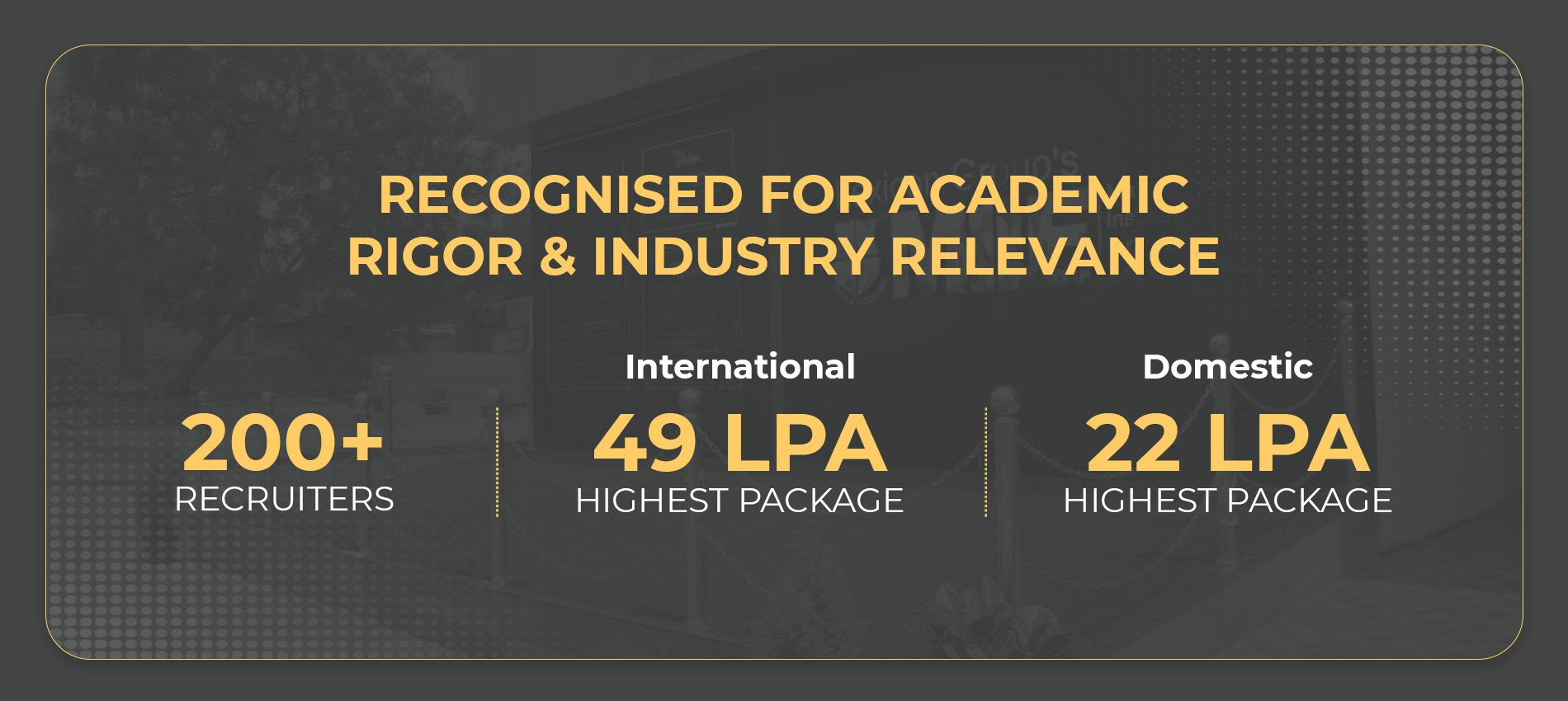
- Lexicon MILE Pune: 97.5% placements, ₹22 LPA highest domestic, ₹49 LPA highest international (Apple, UK)
Which Sectors Are Recruiting the Most PGDM Graduates in 2026?
PGDM placement statistics by sector have shifted in 2026. Here’s the current picture across India’s management hiring market:
| Sector | Recruitment Share | Salary Range | Key Roles in 2026 |
|---|---|---|---|
| BFSI (Banking, Financial Services & Insurance) | 25–30% | ₹7–28 LPA | Financial Analyst, Risk Manager, Investment Analyst, Relationship Manager |
| Sales & Marketing | 28–35% | ₹6–22 LPA | Brand Manager, Digital Marketing Lead, GTM Lead, Category Manager |
| Consulting & Strategy | 12–18% | ₹10–30 LPA | Management Consultant, Business Analyst, Strategy Analyst |
| Technology & IT Services | 15–20% | ₹8–25 LPA | Product Manager, Business Analyst, Digital Strategy, Pre-Sales |
| Analytics & Data | 8–12% | ₹9–33 LPA | Data Analyst, Analytics Manager, Business Intelligence Lead |
| FMCG & Retail | 10–15% | ₹6–18 LPA | Sales Manager, Brand Executive, Category Lead, Trade Marketing |
| Human Resources | 8–12% | ₹5–15 LPA | HRBP, Talent Acquisition Lead, People Analytics, L&D Manager |
| Operations & Supply Chain | 6–10% | ₹6–14 LPA | Operations Manager, SCM Lead, Logistics Analyst, Procurement Head |
Three key observations from this data:
- Consulting commands the highest average packages but has the narrowest intake – most firms hire single-digit or low double-digit numbers per campus
- Analytics has the best salary-to-intake ratio – demand consistently outstrips supply of capable candidates, keeping packages elevated
- BFSI and Sales & Marketing together account for 55–65% of PGDM placements nationally – the largest volume sectors by far
Which Companies Are Actually Recruiting PGDM Students in 2026?
Which companies recruit PGDM students is one of the most-searched questions by prospective students – and the answer varies significantly by institute tier.
-
Top Global & National Recruiters (Tier-1 B-Schools)
At IIMs, XLRI, MDI, and SPJIMR, the recruiter base includes: McKinsey | BCG | Bain | Goldman Sachs | JPMorgan Chase | Google | Microsoft | Amazon | Deloitte | PwC | EY | KPMG | BlackRock | Accenture | Nestle | Hindustan Unilever | P&G | ITC | ABInBev | Mahindra | Tata Group companies
-
Strong Recruiters at Ranked Private B-Schools (Tier 2)
At quality AICTE-approved institutes like Lexicon MILE, IMDR, BIMTECH, and others, the recruiter base includes:
- BFSI: KPMG | ICICI Bank | Kotak Mahindra Bank | Lloyds Bank | BNY Mellon | TIAA | Poonawalla Fincorp | HDFC Bank | Bajaj Finserv | IndusInd Bank
- Technology & Consulting: Apple | Amazon | Accenture | eClerx | Firstsource | DeltaX | mindtickle | Machintel | Tata Capital
- FMCG & Retail: Reliance Retail | Marriott International | Firstcry | Flipkart | Force Motors | Piaggio | Airtel | Aditya Birla Group
- Analytics & Data: eClerx | Firstsource | DeltaX | mindtickle | Square Yards | Knight Frank
- International Recruiters: Apple UK | BT Group UK | Housekeep UK | UK Health Security Agency | Lloyds Bank UK
| Note: Recruiter diversity is more important than recruiter count. 50 companies across 8 sectors is more valuable than 200 companies concentrated in 2 sectors. Always check the sector breakdown of a college’s placements, not just the total recruiter count. |
What Are Recruiters Actually Looking For in 2026? The Real Selection Criteria
This is what most placement guides miss. The job description and the actual interview selection criteria are often different things. Based on recruiter feedback across India’s top B-schools in 2025-26, here’s what’s actually driving hiring decisions:
-
AI and Digital Tool Proficiency – Now a Baseline Requirement
Two years ago, AI tool knowledge was impressive. In 2026, it’s expected. Recruiters at companies like Amazon, Accenture, and Deloitte are now asking about specific tool experience during first-round interviews – Power BI for dashboards, Tableau for visualizations, Python or R for analytics, ChatGPT and Copilot for business analysis workflows.
Students who cannot demonstrate hands-on experience with at least 2–3 relevant tools are at a measurable disadvantage, regardless of their specialization. This is especially true for Analytics, Finance, and Marketing tracks.
-
Domain Depth Over Generalist Knowledge
The ‘I’m interested in everything’ candidate profile is increasingly unconvincing in 2026. Recruiters in BFSI want Finance candidates who can explain DCF valuation and financial modelling confidently. Marketing recruiters want candidates who understand performance marketing metrics, attribution models, and CRM analytics – not just brand theory.
The generalist PGDM graduate who studied all subjects equally is finding it harder to differentiate in a competitive placement pool. Domain depth with cross-functional awareness is the winning combination.
-
Real Project Experience – Not Just Certificates
The shift in recruiter preference from internship certificates to project outcomes is one of the most significant placement trends of 2026. Candidates who can walk through a specific business problem they solved – the brief, the approach, the result, the impact – consistently outperform those who completed internships but cannot articulate concrete contributions.
This is why longer, structured internships (like Lexicon MILE’s 120-day Corporate Immersion Project) are increasingly valued over token 6-week placements. Pre-Placement Offers (PPOs) are also on the rise – XLRI saw 42.5% of its 2026 batch receive PPOs based on summer internship performance, reflecting how critical this phase has become.
-
Communication and Clarity Under Pressure
Case presentation rounds are back in full force across corporate India’s campus recruitment processes. The ability to receive a business problem, structure thinking in 10–15 minutes, and present a coherent recommendation in 3 minutes under scrutiny is a core evaluator.
Clarity matters more than eloquence. Recruiters consistently report that candidates who speak simply and directly about their reasoning are preferred over those who use MBA jargon without substance.
-
Cross-Functional Thinking
The most in-demand profiles in 2026 combine depth of specialization with cross-functional awareness. A Finance candidate who understands how marketing decisions affect revenue forecasting. An HR candidate who can read people analytics dashboards and connect them to talent strategy. An Operations candidate who understands supply chain finance.
This is the profile that differentiates in final rounds – the specialist who thinks like a generalist.
What Is the Average Salary After PGDM in India in 2026?
The average salary after a PGDM in India in 2026 varies significantly by institute tier, specialization, and city. Here’s a realistic, tiered picture:
| Specialization | Entry Salary (Tier-2 Ranked Institute) | Mid-Career (3–5 Years) | Top Package (Tier-2) |
|---|---|---|---|
| Analytics / Business Analytics | ₹9–12 LPA | ₹18–28 LPA | ₹33 LPA |
| Finance / BFSI | ₹8–10 LPA | ₹16–25 LPA | ₹28 LPA |
| Marketing & Sales | ₹7–9 LPA | ₹14–22 LPA | ₹22 LPA (domestic) / 49 LPA (intl.) |
| Human Resources | ₹6–8 LPA | ₹12–18 LPA | ₹26 LPA |
| Operations & Supply Chain | ₹6–8 LPA | ₹12–16 LPA | ₹18 LPA |
| Consulting (entry tier) | ₹10–14 LPA | ₹18–28 LPA | ₹25 LPA |
| Important context: Average salary from IIM-level programmes (₹25–34 LPA average) is not comparable to Tier-2 institute averages (₹8–14 LPA). Both are real – they reflect different institute ecosystems. Use the tier relevant to your shortlist when calculating ROI. |
Long-term trajectory is the more important number. Analytics and Finance graduates who enter at ₹9–12 LPA consistently reach ₹25–40 LPA within 5–7 years – a 3–4x growth curve that makes these specializations among the best ROI tracks in Indian management education.
The 6 Biggest PGDM Placement Trends Shaping 2026
-
Trend 1: AI-Adjacent Roles Are the Fastest Growing Category
Roles that didn’t exist as standalone categories 3 years ago – AI Business Analyst, Marketing Technology Manager, Digital Strategy Lead, Automation Consultant – are now regular campus offerings. These roles pay 20–40% more than equivalent traditional roles and are specifically going to candidates with both domain knowledge and AI tool proficiency.
-
Trend 2: International Placements Are Rising at Dual-Campus Programmes
Programmes with genuine international university partnerships are reporting significant increases in international placement volume. The USW-Lexicon MILE Global MBA track produced international placements at Apple (49 LPA), BT (43 LPA), and Housekeep (40 LPA) in recent cycles – a tier of outcome that wasn’t achievable from a purely domestic programme.
-
Trend 3: PPOs Are Increasing in Importance
Pre-Placement Offers are rising across India’s B-school landscape. For students at any ranked institute, performing well in the internship is now the most reliable path to avoiding the placement lottery entirely.
-
Trend 4: Fintech and Analytics Boutiques Compete With MNCs on Packages
Growth-stage fintech companies, analytics boutiques, and AI-first startups are offering packages competitive with or exceeding large MNCs – sometimes higher – in exchange for more responsibility and faster career growth. Many PGDM graduates in 2026 are choosing these over brand-name roles with slower trajectories.
-
Trend 5: Recruiter Diversity Is the New Quality Signal
Prospective students and parents are becoming more sophisticated in reading placement data. A single recruiter count number is less meaningful than sector diversity, role seniority distribution, and percentage of batch placed vs. percentage offered. The most credible institutes now publish multi-dimensional placement data rather than just headline package figures.
-
Trend 6: Location Premium Remains Significant
Mumbai, Delhi-NCR, Bangalore, and Pune-based PGDM programmes continue to attract stronger recruiter bases than equivalently ranked institutes in non-metro locations. For Pune specifically, the city’s BFSI hub status, strong IT/tech presence, and growing manufacturing corridor make it one of the most recruiter-dense management education markets outside Mumbai and Delhi-NCR.
How Can You Improve Your PGDM Placement Chances in 2026?
This is the most actionable section – because placement outcomes are not passive. The students who land the best offers at every institute tier share the following traits:
- Build specific AI tool proficiency — Tableau, Power BI, Excel advanced, Python basics, and Copilot for your domain. Not all tools — the 2–3 most relevant to your specialization
- Choose a clear specialization early and go deep — dual specialization is available at many institutes; use it to combine domain strength with analytical capability (e.g., Marketing + Analytics, or Finance + Data)
- Treat the internship as a 120-day job interview — PPO conversion is the most reliable placement outcome. Deliver real results, document them clearly, and stay visible to the hiring manager
- Practice case presentations weekly — 15 minutes of analysis + 3 minutes of recommendation delivery is a learnable skill. Students who practice this weekly for 3 months are measurably more competitive in final rounds
- Build a project portfolio, not just a resume — specific business problems you’ve solved, with quantified outcomes, are worth more than 10 certificate names in a placement interview
- Research your target companies before placement season — know their revenue model, recent challenges, and how your specialization fits their current priorities
Lexicon MILE PGDM Placement Data – Verified 2025 Cycle
For students specifically evaluating Lexicon MILE as part of their shortlist, here is the verified placement data from the most recent cycle:
| Metric | 2025 Data |
|---|---|
| Overall Placement Rate | 97.5% |
| Highest International Package | ₹49 LPA – Apple, UK |
| Highest Domestic Package | ₹22 LPA |
| Total Placement Offers | 500+ per academic year |
| Total Recruiting Companies | 200+ |
| Top Sector by Volume | Sales & Marketing – 35% of batch |
| Top Sector by CTC | Analytics – ₹33 LPA highest |
| Finance Highest CTC | ₹28 LPA |
| HR Highest CTC | ₹26 LPA |
Specialization-wise breakdown: Sales & Marketing (35% | ₹49 LPA) | Finance (32% | ₹28 LPA) | HR (22% | ₹26 LPA) | Analytics (11% | ₹33 LPA)
Notable international recruiters: Apple UK | BT Group UK | Housekeep UK | UK Health Security Agency | Lloyds Bank UK | BNY Mellon
Notable domestic recruiters: Amazon | KPMG | Reliance Retail | Marriott | Firstcry | Flipkart | ICICI Bank | Kotak | Poonawalla Fincorp | Knight Frank | Airtel | Piaggio | DeltaX | mindtickle
Programme specifics: PGDM Core (₹8,95,000/-) | PGDM with Global Immersion — Malaysia Y1 + Dubai Y2 (₹10,80,000/-) | 120-day Corporate Immersion Project | HyperBuild AI Lab | 10+ industry certifications
Frequently Asked Questions (FAQs)
-
What is the average salary after PGDM in India in 2026?
The average salary after PGDM in India 2026 ranges from ₹6–12 LPA at Tier-2 ranked institutes, ₹12–20 LPA at strong private B-schools, and ₹25–34 LPA at top IIMs. Specialization matters significantly: Analytics and Finance tracks start higher than Marketing and HR at most institutes.
-
Which companies recruit PGDM students in 2026?
Which companies recruit PGDM students depends on the institute tier. At IIM-level institutes: McKinsey, BCG, Goldman Sachs, Google, Amazon. At strong ranked private institutes like Lexicon MILE: Apple, KPMG, Amazon, Reliance Retail, ICICI Bank, BNY Mellon, Lloyds Bank, Marriott, Flipkart, and 200+ others. Always verify recruiter lists independently rather than relying on brochure claims.
-
Which PGDM specialization gives the best placements in 2026?
By peak salary: Analytics (strongest demand-supply gap, highest salary-to-placement ratio). By volume: Sales & Marketing (35% of batch placements at most institutes). By consistency: Finance (strong demand across BFSI, PE, and consulting). By growth trajectory: Analytics and Finance both show the strongest 5-year salary curves.
-
How important is the institute for PGDM placement outcomes?
Extremely important – arguably more important than the specialization itself. The gap between Tier-1 and Tier-3 PGDM placements is 5–8x on average packages. Within the same tier, recruiter base depth, internship structure, and placement cell quality determine the difference between 80% and 98% placement rates.
-
What are the emerging roles in PGDM placements in 2026?
AI Business Analyst, Marketing Technology Manager, Digital Strategy Lead, ESG Analyst, Fintech Operations Manager, People Analytics Lead, and Automation Consultant are the fastest-growing new categories in PGDM placements in 2026. These roles pay 20–40% more than equivalent traditional roles and specifically require a combination of domain knowledge and AI/digital tool proficiency.
What Do These PGDM Placement Trends Mean for You?
The 2026 PGDM placement market rewards students who prepare specifically, not generally. Clear specialization, AI tool proficiency, real project experience, and communication skills under pressure – these are the variables within your control that move your placement outcome.
The broader PGDM placement trends of 2026 – rising AI-adjacent roles, growing international placements, increasing PPO conversions, and the analytics salary premium – all point in the same direction: management graduates who combine domain depth with digital fluency are the most competitive candidates in India’s corporate market right now. Whether you’re at an IIM, a top private B-school, or a quality-ranked institute like Lexicon MILE, these trends are your opportunity to differentiate – if you act on them early.
Ready to Prepare for the Jobs of Tomorrow?
Discover how AI-integrated learning, a 120-day Corporate Immersion Project, global exposure, and industry mentorship at Lexicon MILE help students stand out during placements.
Schedule your free counselling session today.